


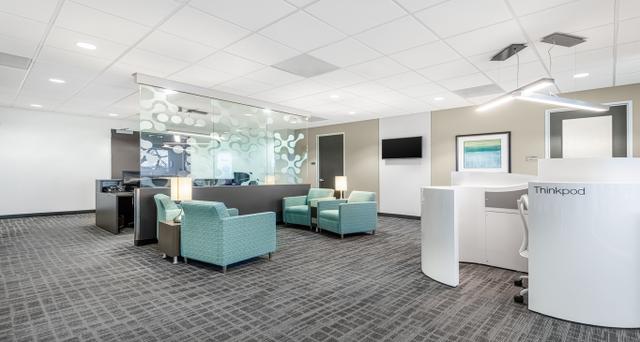


Office Space in Sydney — Flexible Workspaces in the CBD and Beyond
Sydney is Australia's largest city and its leading financial and technology hub, home to the regional headquarters of banks, professional-services firms, and global tech names. Whether you need a premium suite overlooking the harbour or a flexible desk near a metro station, the CBD pairs a world-class business district with excellent transport. From premium towers around Martin Place and Barangaroo to shared workspaces in Tech Central and North Sydney, RentOfficeToday.com makes office rental in Sydney simple to explore and compare.
At a glance: prime net face rents around A$1,150–1,550 per sq m per year · overall CBD vacancy near 13.7% (its highest in roughly 30 years), yet premium-grade vacancy tight at about 9% · leasing incentives elevated at roughly 36–40%, a real opportunity for tenants · a pronounced flight to quality, with no new CBD completions due in 2026.
Why base your business in Sydney
Sydney is the economic engine of Australia and one of the most important business centres in the Asia-Pacific. A stable, common-law jurisdiction, a deep and multilingual talent pool, and a diversified economy spanning banking, insurance, professional services, and a fast-growing technology sector make it a magnet for companies across the region. Financial and professional-services occupiers alone have driven the bulk of recent leasing activity, and the city continues to attract both domestic and international headquarters.
Connectivity is a further draw. The Sydney Metro, suburban rail, light rail, and ferry network link every part of the CBD, while Sydney Airport sits just south of the centre. Modern workplaces cluster around transport hubs such as Wynyard, Martin Place, and Central, keeping commutes short and talent within reach.
The leasing market itself is shaped by a strong flight to quality. Overall CBD vacancy has risen to around 13.7% — its highest level in about three decades — as a wave of new supply completed faster than tenants could absorb it. Yet premium-grade space has moved in the opposite direction, tightening to roughly 9% as occupiers concentrate demand on the best buildings. With no new CBD towers due to complete in 2026 and the next major supply wave not arriving until 2027, prime space is expected to tighten further.
A guide to the main business precincts
Rent and character depend heavily on where you settle. These precincts span the full spectrum — from premium harbourside towers to value space across the harbour. The figures below are indicative prime net face rents, in Australian dollars per square metre per year, before incentives and outgoings.
Martin Place and the Core
The traditional financial core, anchored by landmark addresses such as 1, 20, and 25 Martin Place, Chifley Tower, and the MLC Centre. This is where the flight to quality concentrates, with the city's highest rents and deepest premium stock. Indicative: approx. A$1,300–1,550 per sq m/year.
Barangaroo
The waterfront precinct on the western edge of the CBD, defined by the International Towers and a cluster of banking and professional-services tenants. Premium, amenity-rich, and highly sought after. Indicative: approx. A$1,400–1,600 per sq m/year.
Circular Quay and the Eastern Core
Harbourside towers around Macquarie and Bridge Streets, prized for their views and proximity to the ferry terminals. A prestigious address for finance, law, and corporate occupiers. Indicative: approx. A$1,200–1,500 per sq m/year.
Wynyard and the Western Corridor
The stretch along Clarence, Kent, and George Streets, including Darling Park and Darling Quarter, blends finance with a growing technology base and excellent rail access at Wynyard. A strong balance of prime location and value. Indicative: approx. A$1,000–1,300 per sq m/year.
Midtown
The retail-and-office heart around Pitt Street Mall, Market Street, and Castlereagh Street, well served by the new metro. A mix of established towers and refurbished stock. Indicative: approx. A$950–1,250 per sq m/year.
Tech Central and the Southern CBD
The emerging innovation district around Central Station and Haymarket — future home of the Atlassian headquarters — favoured by technology and creative companies. Indicative: approx. A$900–1,150 per sq m/year.
Across the harbour, North Sydney offers modern A-grade space at more approachable rates, typically around A$800–1,050 per sq m/year, with its own metro station at Victoria Cross improving access further.
Flexible workspaces with Regus
For flexible suites and coworking, we work with International Workplace Group (IWG) — the global leader in flexible workspace and the parent company of Regus. This opens up around 24 locations across Sydney, from the CBD core at Martin Place and the Western Corridor to Barangaroo and North Sydney. Every centre is fully equipped: high-speed WiFi, reception, meeting rooms, and business lounges are included — you only need to bring your laptop.
The IWG group's brands cover every need:
- Regus — the widest network of serviced suites and shared workspaces in the city, at all the major CBD and transport hubs, with access usable worldwide.
- Spaces — creative, design-led environments with a lively community, popular with startups and creative companies.
- HQ — simple, ready-to-use suites with excellent value for money, for teams that want to start quickly and efficiently.
- Signature by Regus — premium space at the best CBD addresses, with a level of service often compared to a five-star stay.
A coworking desk here is priced from around A$199 per person per month, rising to roughly A$819 at prime CBD centres, depending on location, team size, and contract length. Private suites are priced from around A$195 per person per month in North Sydney and from about A$565–659 in the CBD, reaching roughly A$1,055 at premium Martin Place addresses. Day offices start from around A$179 per person per day, and a hot desk from about A$23 per person per day. Private rooms, day offices, and virtual-office addresses are all booked through the same network — flexibly, by the hour, day, or month. As an example, the Regus centre at 20 Martin Place sits in the heart of the financial core, a short walk from Wynyard Station, with serviced suites and coworking and views over Sydney's historic sandstone landmarks.
What you can expect to pay
Rents here are quoted in Australian dollars per square metre per year, most often as a net face rent — the base rent before outgoings and before any incentive. Actual values depend heavily on precinct, building grade, and floor level — from around A$800 per sq m/year for value A-grade space in North Sydney to well above A$1,500 per sq m/year at premium harbourside towers.
The priciest space is, unsurprisingly, in Martin Place, Barangaroo, and the harbourside core: for representative premium floors, occupiers typically see net face rents around A$1,300–1,600 per sq m/year, with prime stock citywide around A$1,150–1,550. Wynyard and the Western Corridor offer good value around A$1,000–1,300, Midtown around A$950–1,250, and Tech Central around A$900–1,150. North Sydney runs around A$800–1,050.
Crucially, headline rents tell only part of the story: incentives — rent-free periods and fit-out contributions — currently run at roughly 36–40%, which can substantially reduce the effective cost for a well-negotiated lease. A flexible alternative is a coworking desk or serviced suite, where you pay per workstation rather than per square metre, with furniture, IT, and services included. These turnkey options are available from around A$199 per person per month.
All figures are indicative; the actual price depends on the building, floor, floor area, incentive, and lease term.
How rents are structured: net face, gross face, incentives, and effective rent
To build a budget, it helps to understand how quotes are put together. A net face rent is the base rent per square metre per year before outgoings; a gross face rent bundles the building's outgoings — council rates, land tax, insurance, and management — into a single figure. On top of that, landlords offer incentives such as a rent-free period or a fit-out contribution, which reduce the net face rent to a lower net effective rent — the number that really matters when comparing options. With incentives currently around 36–40%, the effective cost can be well below the headline. Traditional agreements usually run three to seven years. A modern, energy-efficient building — for example with a strong NABERS rating — helps keep outgoings down and supports long-term value.
Frequently asked questions
How much does office space in Sydney cost?
Prime net face rents run around A$1,150–1,550 per sq m per year. Premium precincts such as Martin Place and Barangaroo reach around A$1,300–1,600, Wynyard and the Western Corridor around A$1,000–1,300, Midtown around A$950–1,250, and North Sydney around A$800–1,050. Note that incentives of roughly 36–40% can substantially reduce the effective cost. Coworking desks are priced from around A$199 per person per month and serviced suites from about A$565 in the CBD.
Which precincts are best for an office in Sydney?
Martin Place, Barangaroo, and the harbourside core offer the most prestigious premium addresses. Wynyard and the Western Corridor combine a prime location with better value, Midtown suits retail-facing and mixed occupiers, and Tech Central around Central Station is the hub for technology and creative firms. North Sydney, across the harbour, offers modern A-grade space at the most approachable rates.
How quickly can I move into an office in Sydney?
Serviced suites and coworking spaces are generally furnished and ready to use, often within days. A traditionally leased floor takes more time for fit-out — usually from a few weeks to several months, depending on the work involved.
What are net face, gross face and effective rents (and incentives)?
A net face rent is the base rent before outgoings; a gross face rent includes outgoings such as rates, land tax, and management. Landlords then apply incentives — a rent-free period or fit-out contribution — which lower the net face rent to a net effective rent. With incentives around 36–40%, the effective cost of a Sydney lease is often well below the headline figure.
Coworking or a private office — which to choose?
Coworking and serviced suites suit startups, small teams, and anyone seeking flexibility without a long-term commitment. A traditional lease makes sense for established companies with a stable footprint that need their own address and a customised layout — and, in the current market, can secure a strong incentive.
Start your search today
Send us your requirements profile and we will propose suites, coworking spaces, and serviced offices with Regus in Sydney — quickly and with no obligation. Begin today and find the ideal base to grow your business.